

1 avenue du Dr. Albert Schweitzer, 33400 Talence, France
remi.giraud@enseirb-matmeca.fr
I am an associate professor of computer science (maître de conférences) at Bordeaux INP, in the ENSEIRB-MATMECA engineering school, where I coordinate the international Electronic department. I do my research at the IMS laboratory, in the Signal and Image group, and I am a member of the In2Brain research group.
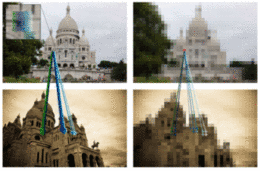
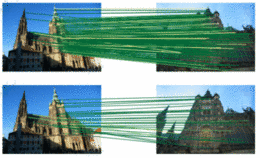
I received an M.Sc. in telecommunications from ENSEIRB-MATMECA and an M.Sc. in signal and image processing from the University of Bordeaux, both in 2014. I obtained my Ph.D. in computer science at the LaBRI and IMB laboratories of the University of Bordeaux in 2017, where I worked on matching algorithms and superpixels for image analysis and processing.
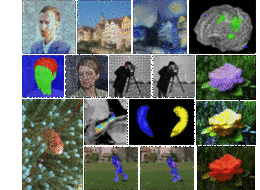
My research activities take place at the IMS laboratory, in the Signal and Image group, around three axes. The first is methodological, the other two are more applied, but the methods are transversal: they all rely on how attention mechanisms can let every pixel query the whole image.
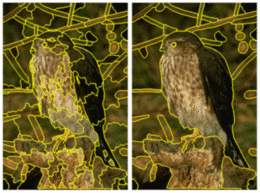
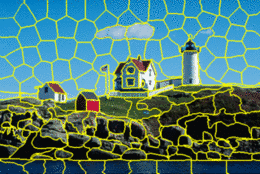
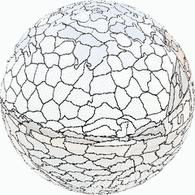
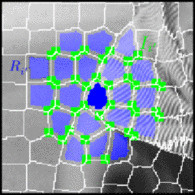
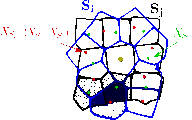
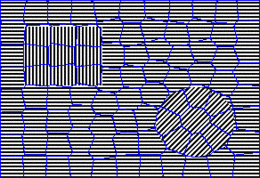
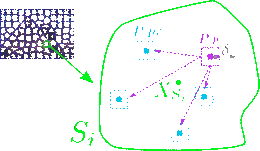
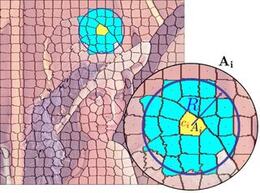
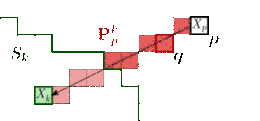
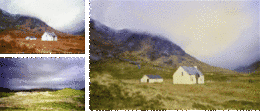
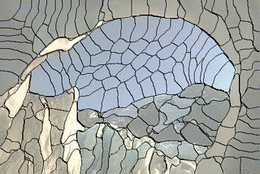
An irregular under-representation of an image, a superpixel being the typical example, groups pixels into homogeneous connected regions: several million pixels to process become a few hundred elements that follow the contours of the objects. I design such decompositions so that they are at once accurate with respect to the image objects and regular in shape and size.
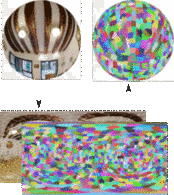
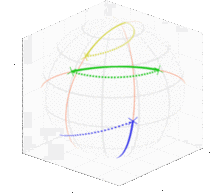
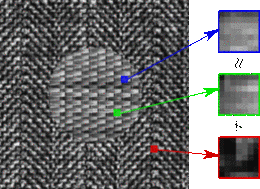
The first methods were built on shortest paths in a graph of pixels or contours, and were extended to textured and circular (omnidirectional) images with Y. Berthoumieu at IMS. The work then moved to region graphs, encoding the spatial relations between superpixels inside convolutional graph networks.
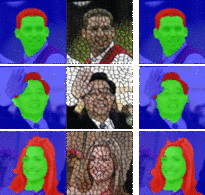
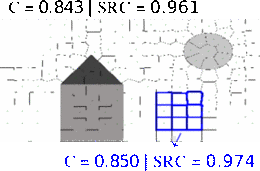
Since 2024 the axis has turned to foundation models: questioning the very validation protocol of superpixel methods, showing that the literature evaluates them inconsistently and sometimes wrongly, and that large pretrained models not designed for the task reach competitive results.
Since late 2024, and within the SegLLM project funded by the University of Bordeaux, I investigate the use of large language models to constrain image segmentation in an adaptive way. The idea is to express in natural language constraints on a segmentation, stated in terms of shape or geometry rather than the usual semantic criteria.
This is the subject of the doctoral thesis of Corentin Seutin (2025-28), co-directed with Michaël Clément and Pierrick Coupé, funded by a doctoral contract. Two master's internships and one doctoral position were already secured for 2025. The first results were published at ICIP 2026 with SANSA, a model that drives a segmentation network from shape and geometric descriptions instead of class names.
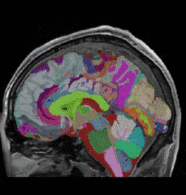
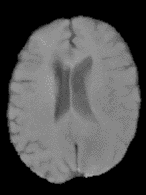
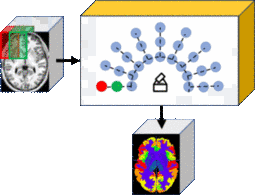
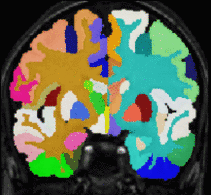
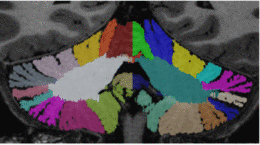
This axis sits mainly inside the ANR projects DeepVolBrain and HoliBrain led by Pierrick Coupé, which study 3D brain MRI through deep learning. Such images count several million voxels, and the memory footprint of conventional networks grows sharply with that size: in AssemblyNet we address this with a large ensemble of small independent networks, each covering a small anatomical region.
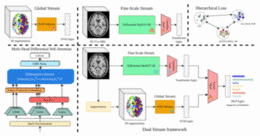
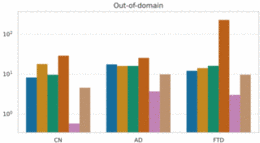
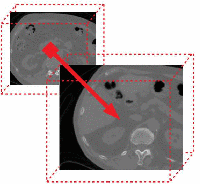
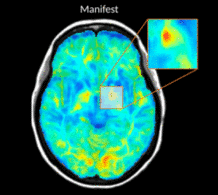
Together with Baudouin de Senneville I extended my patch-based matching work to fast registration of multi-modal images for interventional applications. The thesis of Edern Le Bot (defended 2025) explored how to adapt attention mechanisms to this dimensionality. A second axis, led by the thesis of Eloi Navet within HoliBrain, covers the classification of neurodegenerative diseases, with an international collaboration on patch-scale descriptors.
My PhD thesis and its defence presentation are available online.
Method implementations, released with the corresponding publications.
| Name | Date | Level | Subject |
|---|---|---|---|
| Corentin Seutin | 2025–… | PhD | Segmentation constrained by large language models |
| Julien Walther | 2024–… | PhD | Deep learning models from structural image representations |
| Eloi Navet | 2024–… | PhD | An AI assembly for the prediction of neurological diseases |
| Edern Le Bot | 2022–25 | PhD | Holistic segmentation of brain MRI by artificial intelligence |
| Matthieu Vilain | 2021–24 | PhD | Semi-supervised deep learning for image sequences |
| Name | Date | Level | Subject |
|---|---|---|---|
| Gaspard Mongenet | 2026 | 2A | Radar data space classifier |
| Mohamed Amine Ettaki | 2025 | 2A | Segmentation constrained by large language models |
| Corentin Seutin | 2025 | M2 | Segmentation constrained by large language models |
| Roland Kia | 2025 | 2A | Radar data space classifier |
| Corentin Seutin | 2024 | M1 | Study of metrics for precise segmentation of brain structures on MRI |
| Adrien Aguila-Multner | 2023 | 2A | Deep learning on irregular image low-level representations |
| Lisa Weisbecker | 2023 | 2A | Deep learning on irregular image low-level representations |
| Pierre Pavia | 2022 | 3A | Deep learning on irregular image low-level representations |
| Sohaib Errabii | 2021 | 2A | Deep learning of object spatial relationships |
| Zaid Zerrad | 2021 | 2A | Transformers for computer vision |
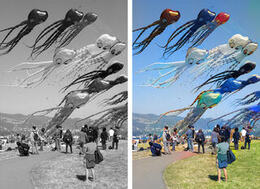
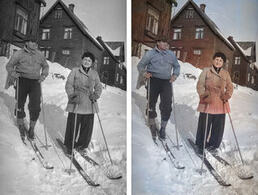
| Baptiste Bénard | 2021 | 2A | Deep learning-based image colorization |
| Maëlle Andricque | 2021 | 2A | Deep learning-based image colorization |
| Otávio Jacobi | 2020 | 2A | Deep learning on graphs for image processing |
| Arthur Longuefosse | 2020 | M2 | Dual irregular under-representations for image processing |
| Shanshan Zhao | 2020 | M2 | Deep learning from structural image representations |
| Daniel Bravo | 2020 | M2 | Deep learning-based fusion of multi-modal data |
| Merlin Boyer | 2019 | 3A | Matching algorithms for irregular structures |
| Rodrigo Borba Pinheiro | 2019 | 2A | Segmentation and classification of raw radar videos |
| Nathan Lichtlé | 2018 | L3 | Superpixel methods for color transfer |
| Enzo Peruzzetto | 2018 | M1 | Fast style transfer between images |
| Benjamin Thibault | 2016 | M2 | Patch-based methods for medical image segmentation |
| Name | Date | Funding | Topic |
|---|---|---|---|
| BoatClassif | 2026–27 | GIS Albatros micro-project (PI) | Classification of ship signatures from radar data. |
| BoatRadar | 2025–26 | GIS Albatros micro-project (PI) | Ship signature recognition from radar data. |
| SegLLM | 2025 | University of Bordeaux, Department SIN (PI) | Adaptive image segmentation guided by language models. |
| HoliBrain | 2023–27 | ANR PRC (member) | Holistic analysis of the human brain across anatomical levels. |
| DeepVolBrain | 2019–23 | ANR JCJC (member) | Deep learning for brain volumetry, behind the open-access VolBrain platform. |
| RADAR-SP | 2019–21 | Thales internal research project (PI) | Segmentation of circular-scan radar images by image under-representation. |
| APRES | 2021–22 | GdR ISIS, CNRS (PI) | Deep learning from structural representations of images. |
| ViTAS | 2021 | University of Bordeaux, Department SIN (PI) | Computer vision, transformers and self-supervision, linking two doctoral theses. |
| GOTMI | 2017–21 | ANR (member) | Generalized optimal transport models for image processing. |
I teach computer science and signal/image processing at ENSEIRB-MATMECA, across four departments.
I am also International Department Coordinator (CIF) for the Electronic department, and Mobility Coordinator for Vietnam and Malaysia (presentation).
| Course | Level | Code |
|---|---|---|
| UNIX and C programming | 1A | EEL5-NUMP1 |
| Numerical signal processing | 2A | EEL6-NUMP2 |
| Signal and image processing | 2A | EEL7-TSIG2 |
| Machine learning | 3A | EEL8-TSIA1 |
| Artificial intelligence, advanced | 3A | EEL9-TSIA2 |
| Research projects | 3A | EEL8-PROJ1 |
| Thematic projects | 3A | EEL9-TSPR1 |
| Image processing | 2A | EIN8-ITEC2 |
| Image processing | 2A | ESE8-TSIG1 |
| Introduction to image processing | 2A | ETE7-TSIG3 |
| Course | Level | Code |
|---|---|---|
| Pattern recognition | 3A | TS326 |
| UNIX and C | 1A | PG109 |
| Computer architecture | 1A | IF103 |
| Web programming | 1A | IT103 |
| Operating systems (Bash) | 1A | IF110 |
| Multimedia compression | 2A | TS214 |
| Image processing | 1A | CO7SFTS0 |
| Image processing and analysis | 3A | IT317 |
Countries where I have attended a conference, a summer school or a research visit. Hover a highlighted country for its name.